The word "Malibu" isn't English. It isn't Spanish. It's an anglicized version of a Chumash word, Humaliwo, sometimes written Humaliwu, that has been spoken on this coastline for longer than most of the world's major cities have existed.
And the place it referred to wasn't a region or a stretch of coast. Humaliwo was a specific Chumash village, occupied for thousands of years, sitting at the mouth of what we now call Malibu Lagoon, a few hundred yards from where the surfers paddle out at Surfrider Beach.
"Where the Surf Sounds Loudly"
The most commonly accepted translation of Humaliwo is "where the surf sounds loudly." Linguists working with the Chumash language family, Samala, Ventureño, and the related dialects of the Santa Monica Mountains, generally agree on the meaning, though the exact phonetics shift from source to source.
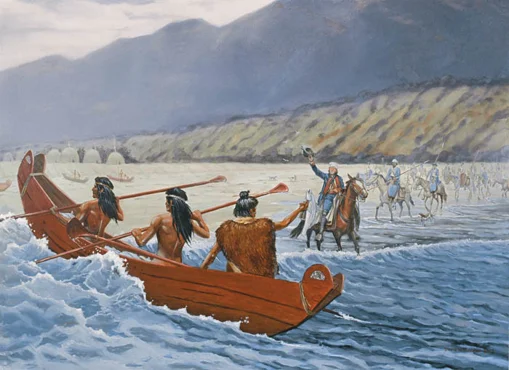
Photo by Anza Trail NPS via shutterstock
The translation alone is worth lingering on. The Chumash were a coastal people. They knew the difference between coves with rolling beach break and coves where the swell wrapped and amplified against the headlands. The fact that one of the Pacific's most famous wave systems, a wave that surfers fly across continents to ride, was named "where the surf sounds loudly" by people listening to it more than a thousand years before the longboard existed is one of the small, perfect coincidences of California geography.
A Village, Not a Region
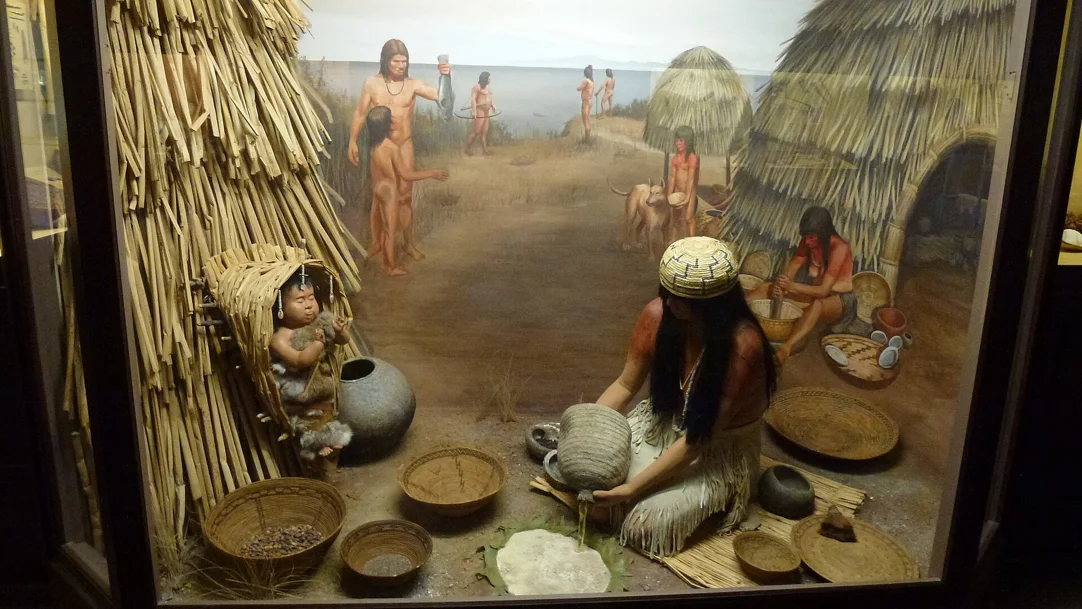
Humaliwo wasn't a Chumash name for the area. It was a village. The site, designated in the archaeological record, sits on a low rise above Malibu Lagoon, the wetland between the Adamson House and the Malibu Pier. Excavations beginning in the 1950s and continuing into the 1970s uncovered house floors, burials, fishing implements, bone tools, shell beads, and the shell middens, the ancient kitchen-pile of clam, mussel, and abalone shells that builds up over centuries of village life, that are the surest sign of a long-occupied coastal settlement.
By the standards of California archaeology, the deposits at Humaliwo are deep. Radiocarbon work at the site indicates substantial occupation from at least the first millennium BC, with intensification of village life from roughly AD 1000 onward. The point is not the precise date, it's that the place was lived in continuously, across a span of time that dwarfs the entire post-contact history of California.
What the Village Was Like
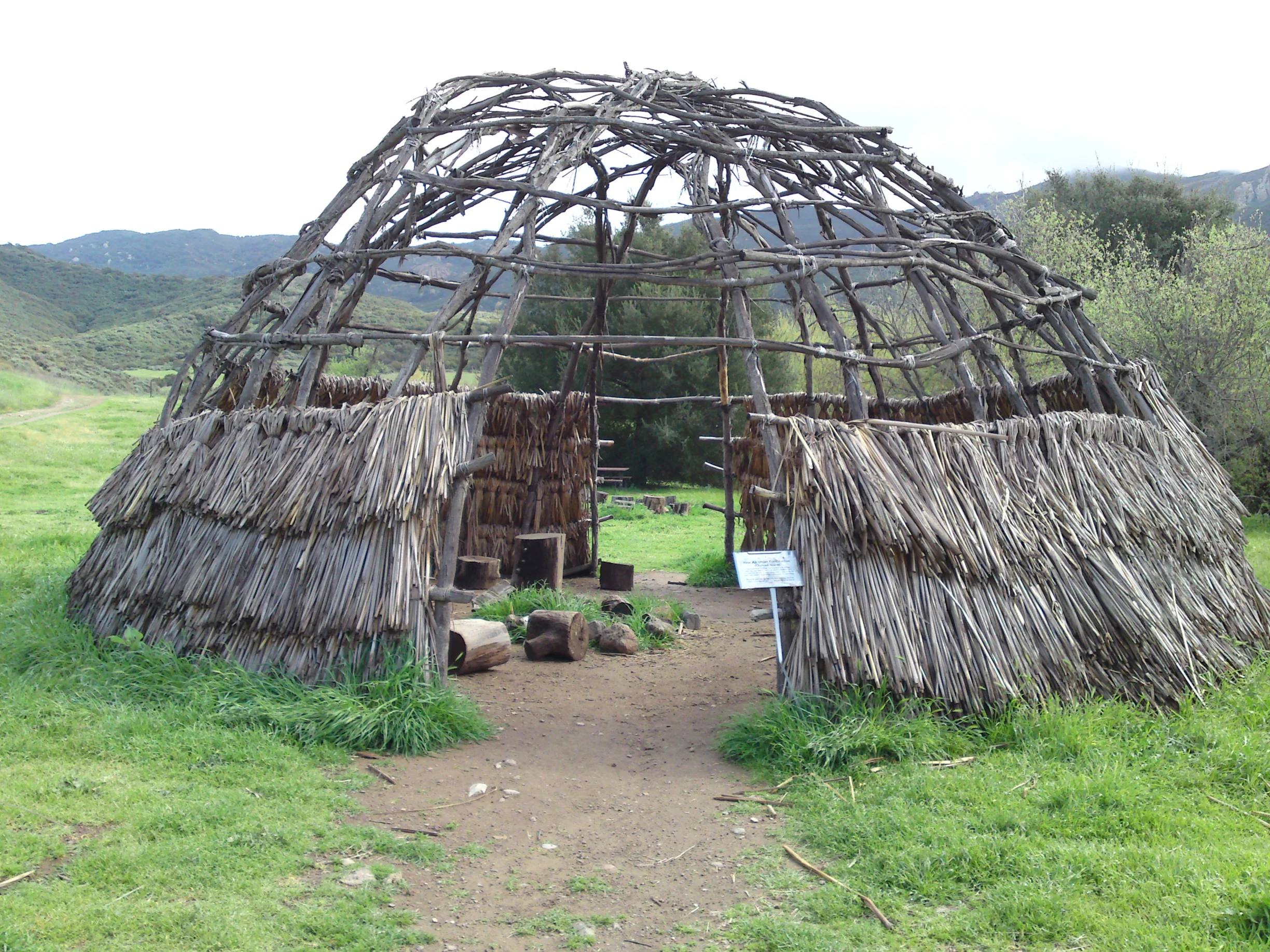
Humaliwo was not a small camp. At its peak, archaeologists estimate it housed somewhere between 150 and 200 people in domed thatched houses arranged on the lagoon's edge. The location made it a hub: a freshwater creek behind, an estuary full of waterfowl and shellfish below, the open ocean a stone's throw to the south, and the trail system through the Santa Monica Mountains running north toward the inland Chumash villages near today's Calabasas, Newbury Park, and Lake Sherwood.
The Chumash here were not subsistence villagers. They were traders. Their tomols, redwood-plank canoes sewn together with milkweed cordage and sealed with asphaltum collected from the natural tar seeps along the coast, were among the most sophisticated watercraft ever built in the pre-contact Americas. Tomols routinely crossed the Santa Barbara Channel, connecting Humaliwo and the other mainland villages to the Chumash settlements on Santa Cruz, Santa Rosa, and San Miguel Islands. Olivella-shell beads strung on the islands moved inland through Humaliwo as a kind of currency, carried over the mountains to villages where seashells were treasure.
By the time the Spanish arrived, Humaliwo was a known stop on the coastal trade route, substantial enough that it appears in early mission records as a recognized village name.
What Happened
The story from here is the familiar one, in compressed form. Spanish contact intensified in this stretch of coast with the founding of Mission San Buenaventura in 1782 and Mission San Fernando Rey de España in 1797. Baptismal records from the late 1700s and early 1800s show Humaliwo residents being baptized at both missions, predominantly at San Fernando. Disease and forced relocation emptied the village. By the early 1800s it was effectively gone as a living settlement, though the site remained, walked over and reburied by every successive wave of land use, from the Tapia ranch to the Rindge ranch to the Adamson estate to the modern state beach.
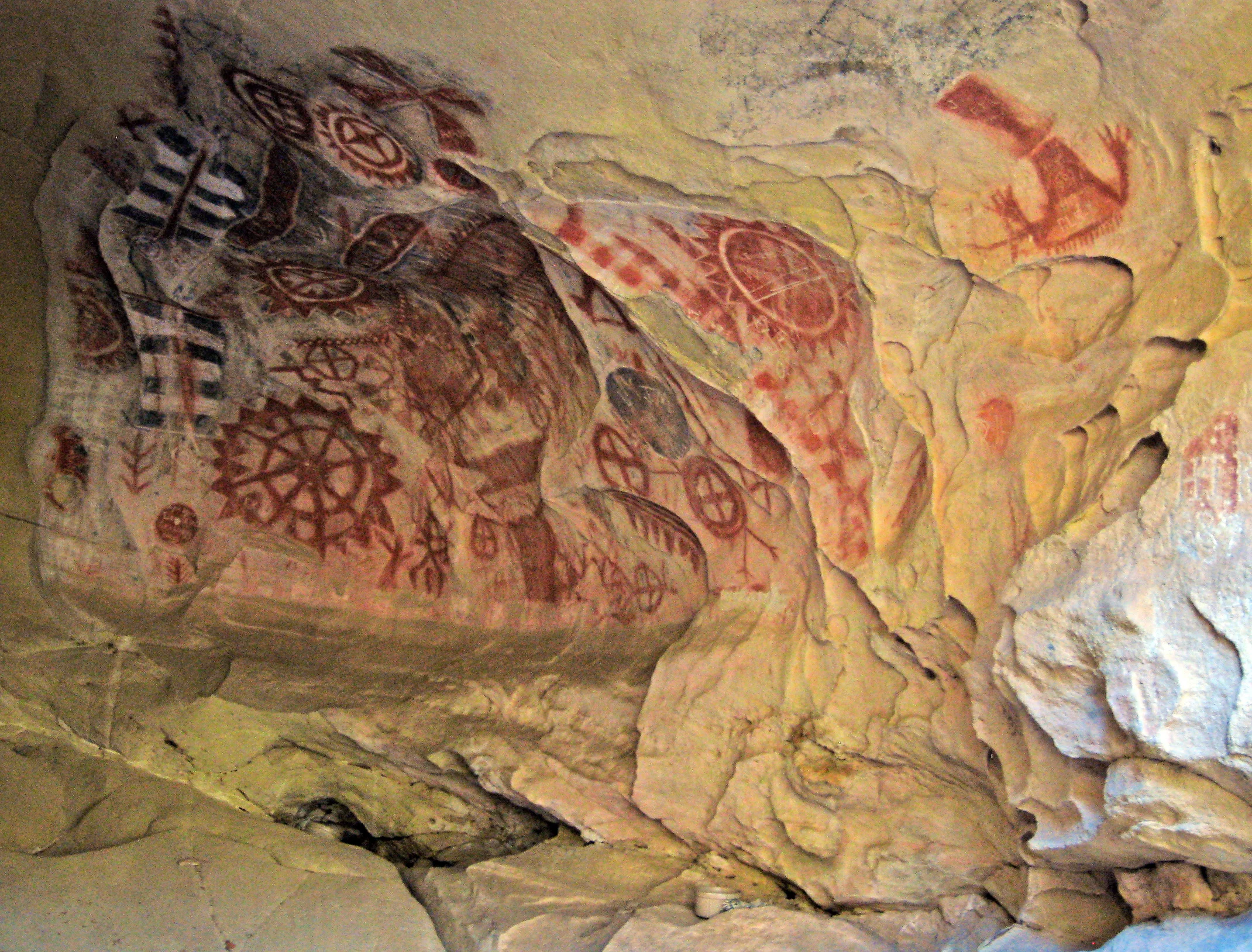
Photo by Sean and Erica via Shutterstock
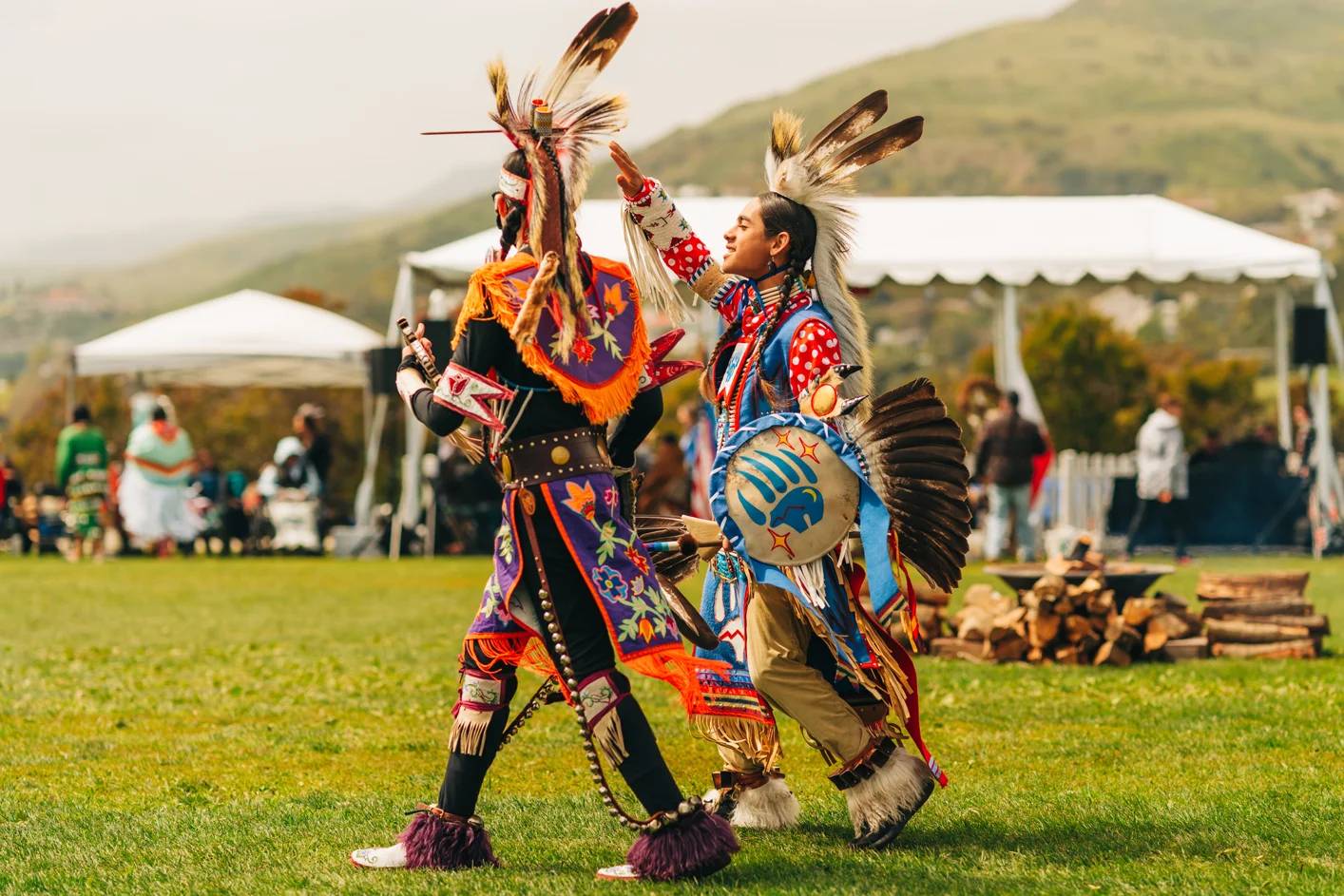
The Chumash themselves are not gone. The Wishtoyo Chumash Village in Malibu, a recreated village built on a bluff above Nicholas Canyon Beach, is run by Chumash educators and is one of the best places anywhere to see how a coastal Chumash village functioned, with a working tomol, traditional thatched homes, and active cultural programming. Members of the various Chumash bands live across Ventura and Santa Barbara counties, and the cultural recovery work of the last several decades has reframed how much of the pre-contact story is still very much present.
The Name "Malibu"
The word "Malibu" has been through a lot of mouths between, say, 500 BC and 2026. Spanish chroniclers and later American mapmakers spelled it a dozen different ways, Maliwu, Malibo, Umalibu, before settling on the version we use now. The Rindge family standardized it on deeds and railroad maps in the late 1800s. By the time the freeway signs went up, almost no one was asking what it meant.
It means "where the surf sounds loudly." It always has. And the place it named is still there, under the lagoon boardwalk, listening to exactly what it was named for.
Considering a Home on the Malibu Coast?
Few places in the world have been treasured for as long, or by as many people, as this stretch of coast. Shen Realty has been guiding buyers and sellers along Malibu's most storied beaches for decades — from Malibu Colony homes for sale and Carbon Beach real estate to Point Dume, the bluffs above Malibu Lagoon, and the wider Malibu, CA homes for sale market. If you're exploring the coast or curious what your property could command, our team would be glad to help.
Sources
- Lynn H. Gamble, The Chumash World at European Contact (University of California Press, 2008)
- Robert O. Gibson, The Chumash (Chelsea House, 1991)
- Alfred L. Kroeber, Handbook of the Indians of California (Bureau of American Ethnology Bulletin 78, 1925)
- John P. Harrington field notes — National Anthropological Archives, Smithsonian Institution
- Chester D. King — archaeological reports on CA-LAN-264 (Malibu Lagoon site)
- Travis Hudson and Thomas Blackburn, The Material Culture of the Chumash Interaction Sphere (Ballena Press, 1980s)
- Jan Timbrook, Chumash Ethnobotany (Heyday Books / Santa Barbara Museum of Natural History, 2007)
- Wishtoyo Chumash Foundation
- California State Parks — Malibu Lagoon State Beach
- Mission San Fernando Rey de España and Mission San Buenaventura baptismal registers (Early California Population Project, Huntington Library)