If you'd stood at the corner of Thousand Oaks Boulevard and Conejo School Road in the summer of 1965, you could have heard a lion roar in broad daylight. The sound wouldn't have been coming from a film reel or a memory. It would have been coming from a cage about two hundred yards away, one of dozens at Jungleland USA, an honest-to-God wild-animal park sitting right where the Civic Arts Plaza stands today.
For roughly forty years, Thousand Oaks was one of the most unlikely zoological capitals in the United States. The story starts in 1926 with a former trapper named Louis Goebel.
A Trapper, Six Lions, and Five Acres of Scrub
Goebel had been working at Universal's animal compound on the studio back lot when, in 1925, Universal decided to relocate its operation and offload most of its livestock. Goebel bought several of the lions and went looking for a piece of land cheap enough to keep them on. He found five acres of bare scrub along the old Ventura Boulevard, in what was then a near-empty stretch of the Conejo Valley.
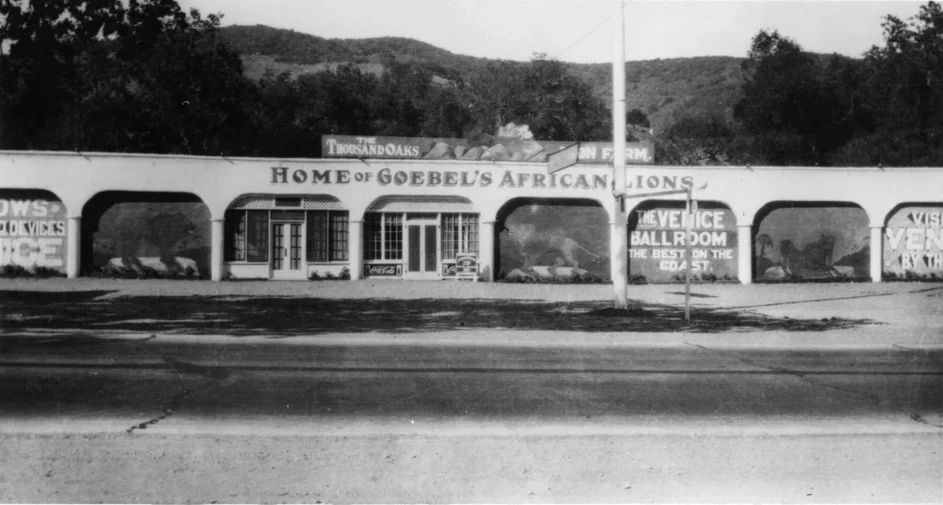
He called it Goebel's Lion Farm. Within a few years it was one of the dominant suppliers of trained big cats to Hollywood. When a studio needed lions, leopards, chimpanzees, or elephants for a jungle picture, Goebel's was the first call. The Tarzan films of the 1930s, and dozens of jungle, safari, and Western pictures that followed, were essentially shot around Goebel-trained animals.
Goebel kept expanding. He added tigers, bears, big snakes, more elephants, and eventually a small public viewing area so motorists driving Ventura Boulevard could pull off and pay a quarter to see the menagerie. It was, in effect, one of the first roadside zoos in California.
Jungleland
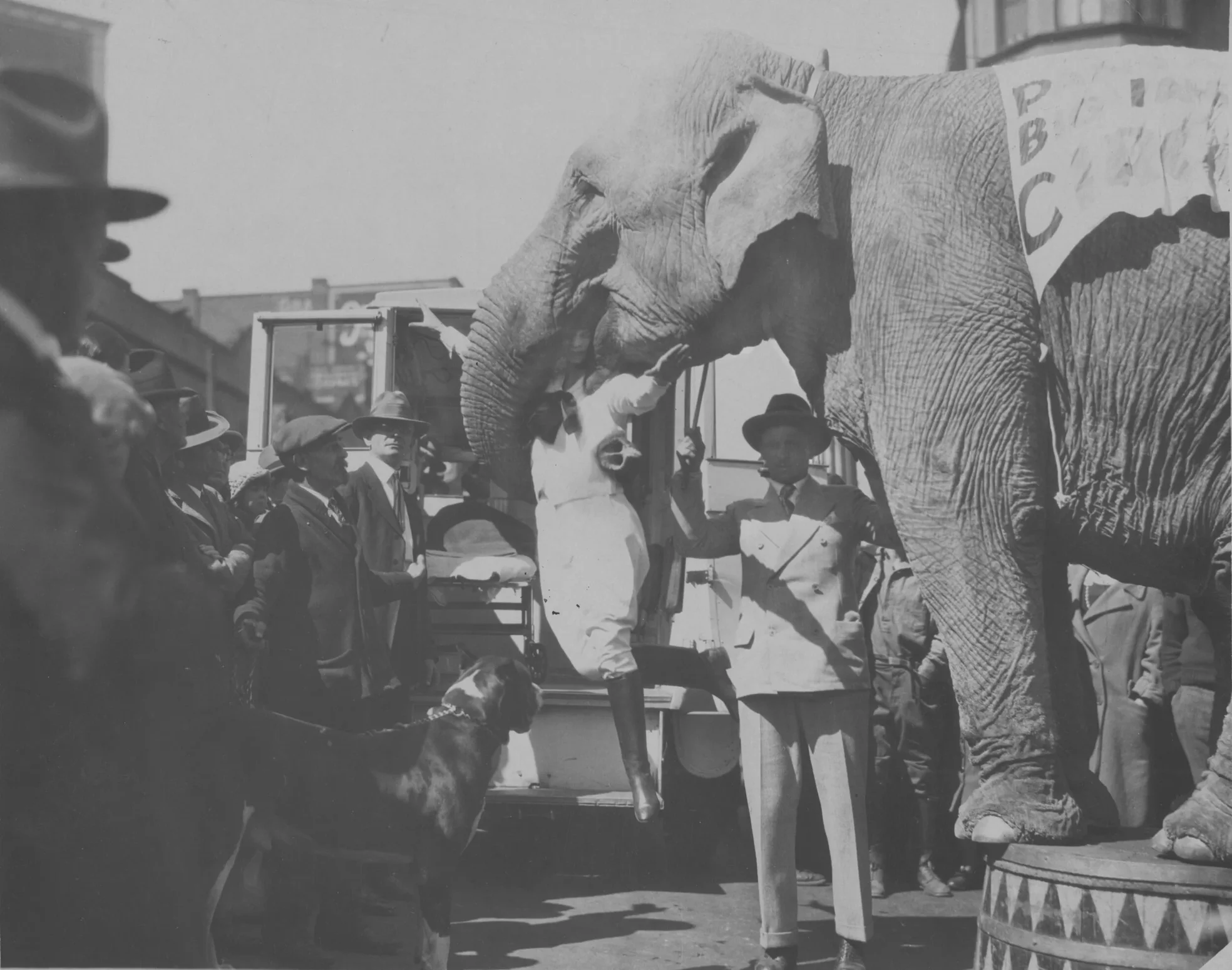
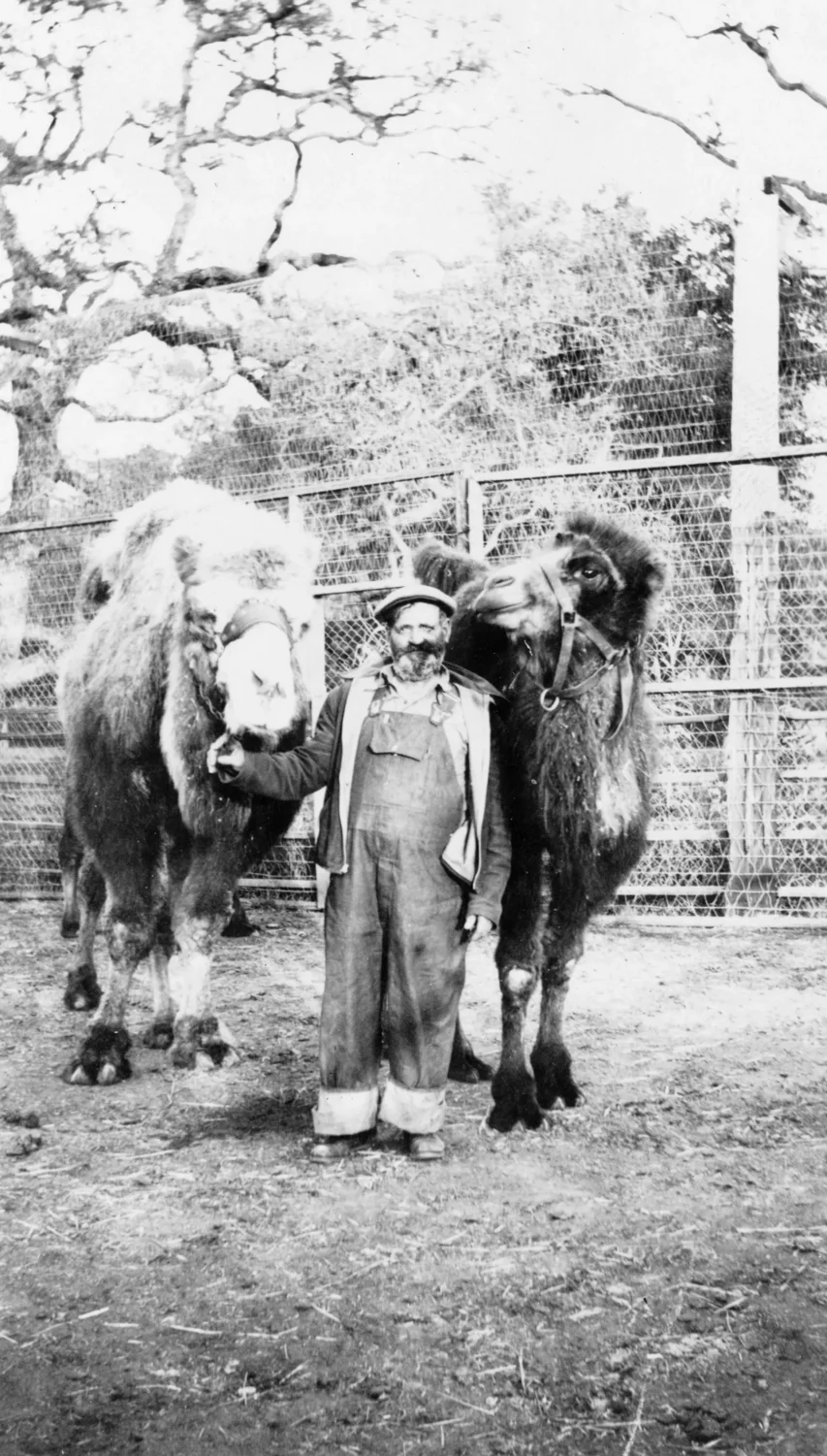
By the 1950s the operation had changed hands, expanded again, and taken on a new name: Jungleland USA. Under its new operators it stopped being just a Hollywood holding pen and became a destination in its own right. There were animal acts, a circus tent, a children's area, elephant rides, and a midway. At its peak, Jungleland reportedly held more than 1,500 animals, lions, tigers, leopards, bears, hippos, chimpanzees, elephants, snakes, and the largest collection of trained jungle cats in the country.
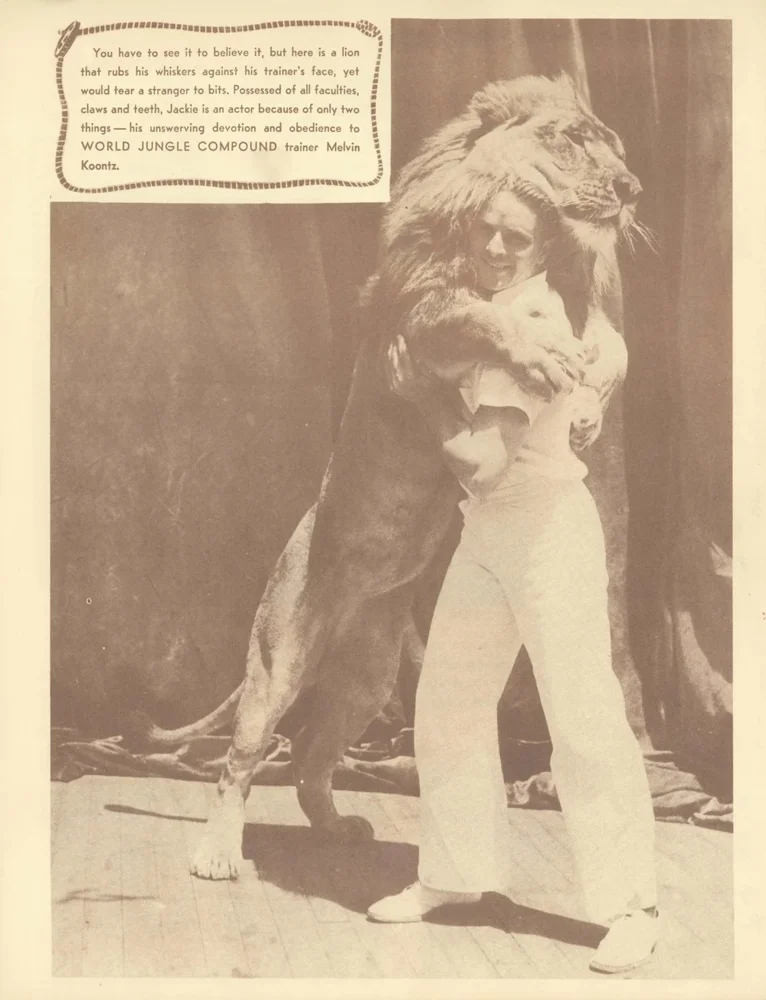
Sunday afternoons at Jungleland looked like a county fair grafted onto a wild-animal preserve. Families parked along Thousand Oaks Boulevard, kids fed peanuts to elephants, and trainers in safari outfits walked tigers across the midway. For people who grew up in the Conejo Valley in the 1950s and 60s, it's the defining memory of the place.
The Beginning of the End
A few things turned against Jungleland at once. Disneyland had opened in 1955, then Marineland, then a wave of better-funded family attractions. Insurance for an open-cage zoo grew expensive. Standards for animal welfare and public safety were beginning to tighten.
And in November 1966, the young son of actress Jayne Mansfield was attacked by a lion during a family visit. He survived, but the resulting lawsuit and the publicity around it were devastating. Mansfield herself died in a car accident the following summer, which kept the story in the news. Attendance fell. Costs didn't.
In October 1969, Jungleland declared bankruptcy and announced an auction.
The Auction
The 1969 auction is one of those events that sounds invented. Over two days, the entire collection went under the hammer, lions and tigers sold by the cage, elephants by the head, parrots by the lot. Buyers came from circuses, private collectors, other zoos, and, surreally, ordinary Conejo Valley residents who decided they would, in fact, like to take home a small alligator. The actress Tippi Hedren bought several of the big cats; they eventually became the foundation of her Shambala Preserve up in Acton.
The buildings were demolished. The land was sold to the city. Over the next twenty-five years it became the Thousand Oaks Civic Arts Plaza, the library, and the surrounding civic center that defines the heart of the modern city.
What's Left
Almost nothing on the ground. There's a small historical marker near the Civic Arts Plaza and a permanent exhibit at the Stagecoach Inn Museum in Newbury Park with photographs, props, and a few of Goebel's original tools. The Conejo Valley Historical Society holds more in its archives.
The easiest way to find Jungleland today is to listen for it in language. When older Thousand Oaks residents say they "grew up next to the lion farm," they're not exaggerating or being metaphorical. They mean exactly that. And the next time you sit through a performance at the Civic Arts Plaza, it's worth knowing that the lobby you're standing in is, almost exactly, where the big-cat enclosures used to be.
The Conejo Valley has changed in a lot of ways since 1926. Very few of them are as strange to picture as the years when a working zoo sat on Thousand Oaks Boulevard. It's one of the small reasons this part of the world keeps surprising the people who think they already know it.
Looking for a Home in the Conejo Valley?
The valley has changed enormously since Louis Goebel parked his first lion cage on Ventura Boulevard, but the reason people keep choosing to live here hasn't. Shen Realty represents buyers and sellers across Westlake Village homes for sale, Agoura Hills real estate, and the wider Thousand Oaks and Conejo Valley market. Whether you're considering a move into the area or just wondering what your home is worth in today's market, we'd be glad to start the conversation.
Sources
- Conejo Valley Historical Society
- Stagecoach Inn Museum, Newbury Park — permanent Jungleland exhibit
- Los Angeles Times archives — 1966 Mansfield incident and 1969 auction coverage
- Ventura County Star archives — Jungleland closure and property sale
- Tippi Hedren, Tippi: A Memoir (William Morrow, 2016)
- Thousand Oaks Library Local History Collection
- City of Thousand Oaks — Civic Arts Plaza development records and historical marker
- Robert Hough, Mabel Stark: A Life Under the Big Top (Tin House, 2006)